May 2025
Most damage in a move doesn't happen on the road — it happens in the box, from items that were never properly cushioned or separated in the first place. The good news is that professional packing technique is mostly about a handful of habits, not expensive materials.
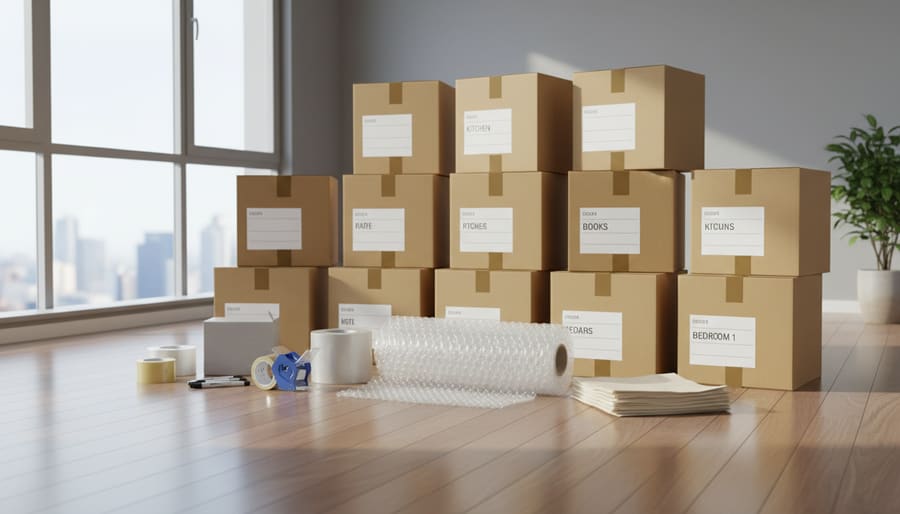
Start with the right box for the job. Dishes and glassware belong in smaller, double-walled boxes — a large box packed heavy is exactly what causes bottom seams to fail. Wrap each plate individually, stack them on edge rather than flat, and fill every gap with paper so nothing can shift.
For artwork and mirrors, use corner protectors and a flat picture box, and always mark the box "fragile" and "this side up" on every visible face, not just the top. Electronics travel best in their original boxes when you still have them; if not, wrap cables separately and take a photo of the setup before you disconnect anything.
Finally, never leave empty space in a box. A half-full box collapses under the weight of the ones stacked on top of it, even if nothing inside is heavy. Crumpled paper or a folded towel is enough to keep everything locked in place.
If fragile items make you nervous, our packing crews handle this every day with commercial-grade materials — worth considering for the pieces you can't replace.
Related Articles